
Pipeline Vulnerabilities
A primer on pipeline stations and hydraulic capacity

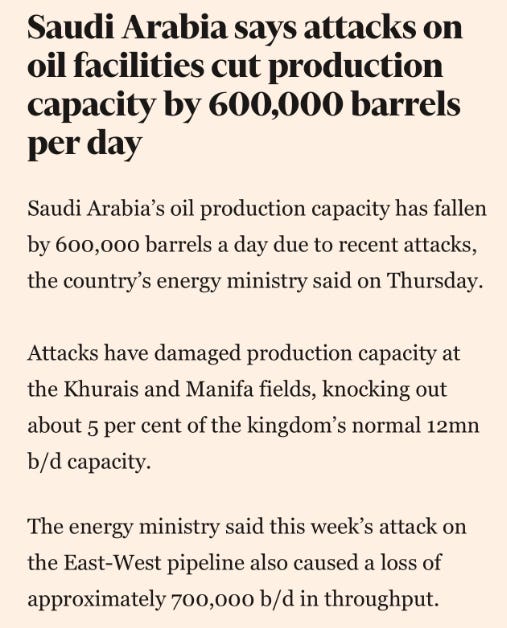
It was reported that Iran struck Saudi Arabia’s East-West pipeline yesterday, resulting in capacity reduction.
While pipelines may seem like an intuitive alternative solution to export restrictions, they too are easily targeted during conflict. Pipelines are static and difficult to protect due to the geography they span. As the majority of pipelines are buried, ground cover provides some protection and concealment. But there are easier targets than the pipeline itself; namely, intermediate pump stations.
Every pipeline has a maximum capacity defined by physical limitations.
Consider the most basic single pump station segment:
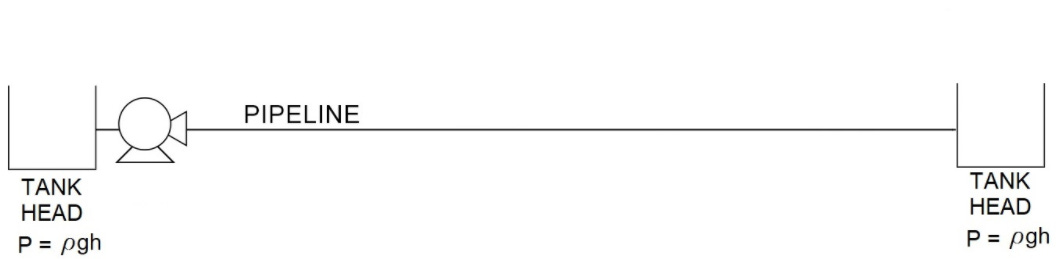
A pump confers energy into a fluid in the form of pressure.
The initiation station can discharge up to the pressure limitation of the pipe, the maximum allowable operating pressure (MAOP).
Delivery is often to tank. Long-time readers may recall the boundary conditions dictated by a storage tank. Refresher located here:
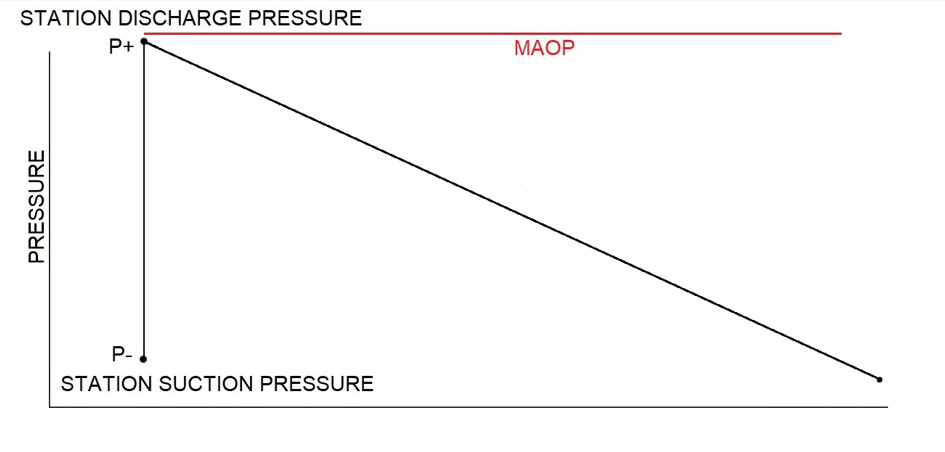
There is now a differential pressure between the pump discharge at the pipeline origination and the termination delivery tank. For a given fluid, temperature and pipeline diameter, the differential pressure between a defined distance dictates the flowrate. This is also called the pipeline capacity. For fluid mechanic enthusiasts, ignore elevation changes. Pressure head and slack-line conditions will be addressed at a later date.
This simple pipeline cannot flow any faster than that defined by the differential pressure, unless the physical system or fluid parameters change. Again, for those familiar with fluid mechanics, DRA is a topic for another day.
To get more flowrate, the segment can be shortened. That is, the same differential pressure for a shorter pipeline distance. But pipelines have defined delivery locations, the line cannot simply be arbitrarily shortened. Instead, multiple consecutive pipeline segments can be pieced together with intermediate pumps stations.
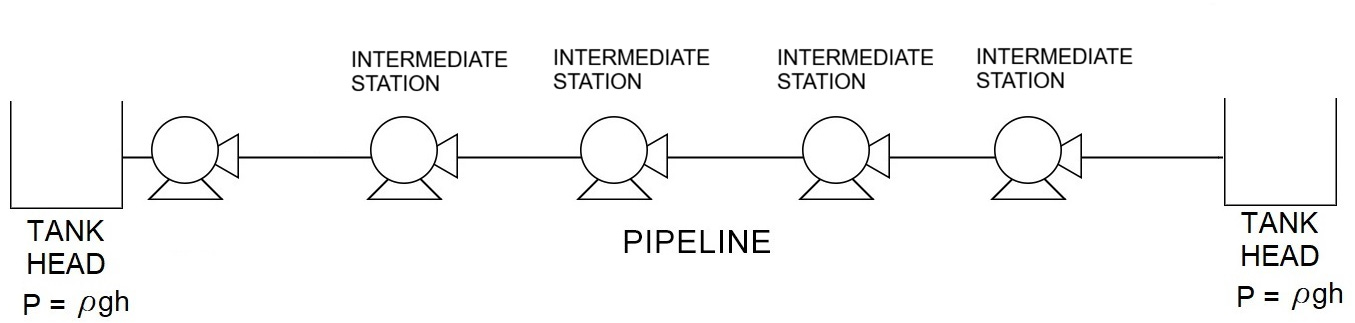
More stations with shorter spacing between them will lead to higher capacities.
The hydraulic pressure profile of a segmented pipline looks like:
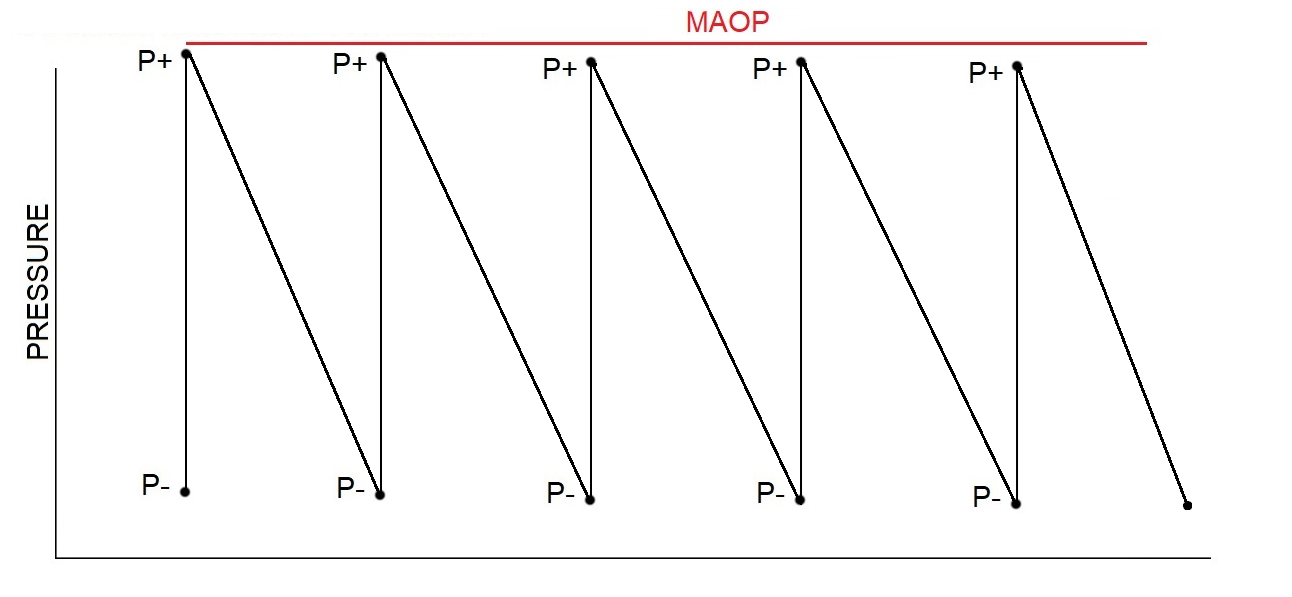
The same physical limitations described previously still exist though. Rate is defined by differential pressure. The segment with the lowest rate defines the rate of the entire line. This is because liquids are essentially incompressible. Conservation of mass states the fluid going into the system must be the same as the fluid exiting.
An online search shows that Saudi’s East West pipeline has 11 pump stations.
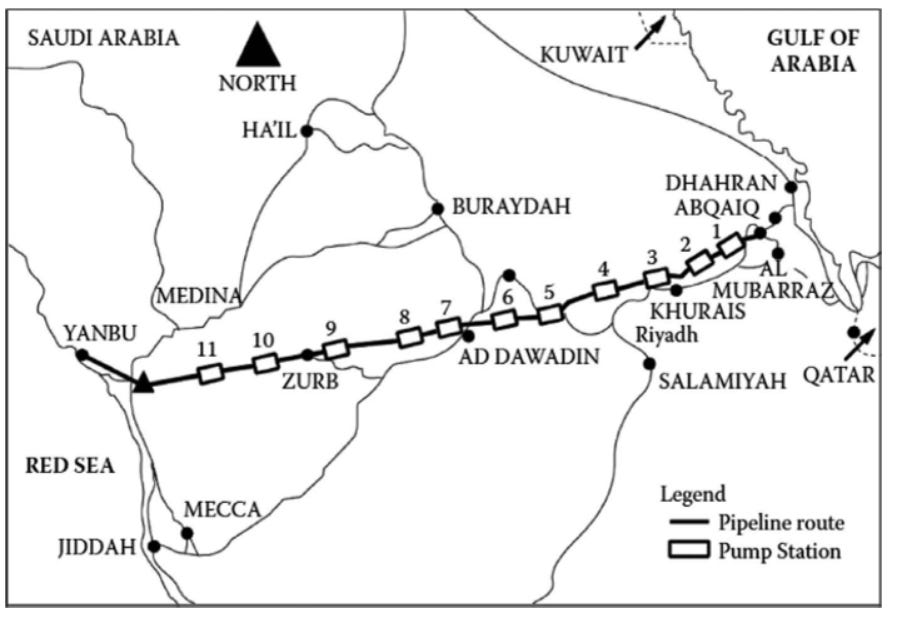
If an intermediate station is attacked, the pumps can be damaged.
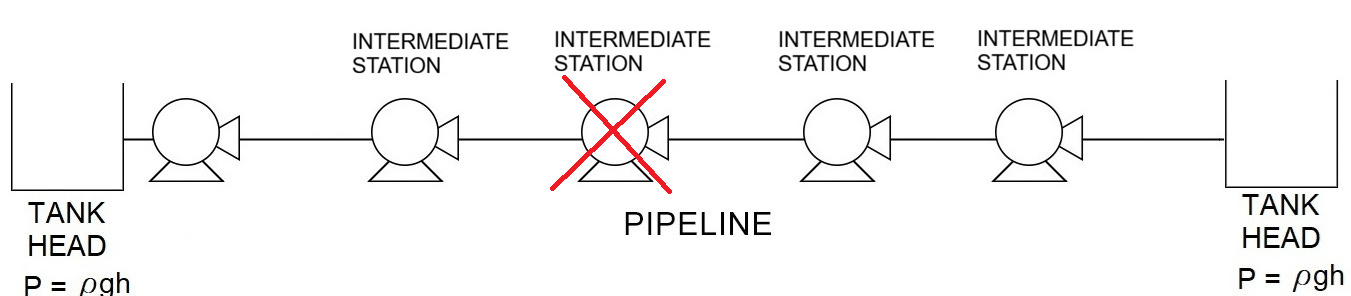
If a pump station is damaged, valves are closed to isolate the pumps and and the pipeline can bypass the station. Service can continue. However, since there is no energy being transferred to the fluid at that location, capacity for the whole system falls. Capacity is now defined by the differential pressure across the longer pipeline segment.
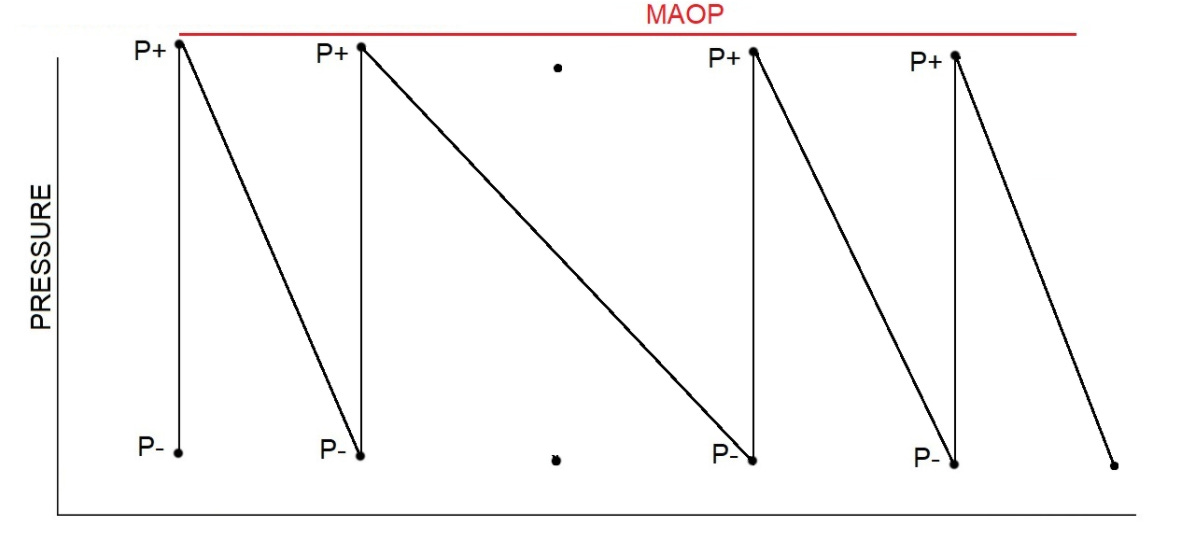
The East-West pipeline is a giant looped pipeline system consisting of parallel 48” and 56” diameter lines. There aren’t many pipelines of this size in operation globally. The Trans-Alaska system is the only 48” diameter US pipeline. Centrifugal pumps for this type of operation are very large, expensive and time-consuming to manufacture. These pumps cannot be easily replaced when damaged. Capacity isn’t lost forever but the limitation persists until the station is repaired. Some specialty pumps and valves require over a year of lead time to produce.